Who are Young Carers?
A young carer is a child or young person under the age of 18 who helps to support or care for someone in their family or someone close to them. This may be because that person has an illness, disability, mental health difficulty, additional need, or difficulties with drugs or alcohol.
The support a young carer provides can look very different from one family to another. It may involve practical help, emotional support, or simply thinking and worrying about the needs of someone they care about.
At our school, we recognise that children can be affected by the needs of someone in their family even if they do not have an active caring role. This includes children who have a sibling with SEND, a disability, illness or other additional needs. For example, family routines, activities and the time available with parents or carers may sometimes be affected by the needs of another family member.
Our aim is not to label children or families, but to recognise when a child may benefit from a little extra, support or someone to talk to.
What might a young carer do?
Every young carer's experience is different. Some may:
- Help with shopping, cooking or household jobs
- Help someone remember or manage medication
- Help with practical tasks or personal care
- Support someone to get around or leave the house
- Keep an eye on someone to make sure they are safe and well
- Offer reassurance, company or emotional support
- Help to look after brothers or sisters
- Take on extra responsibilities when someone at home is having a difficult day
Some children may do several of these things, while others may not provide practical care at all but may still affected by their family circumstances.
How common is it?
There are many young carers across the UK, and some children may not realise that the support they provide could be considered caring.
Young carers can sometimes remain unidentified because:
- Their family circumstances or the needs of the person they support may not be obvious to others
- Caring feels like a normal part of family life to them
- They may not think of themselves as a "young carer"
- They may prefer to keep family circumstances private
- They may worry about what friends or other people will think
- They may worry about what might happen if they tell someone
- They may not realise that support is available
- Families may be unsure about asking for help or may worry about being judged
Asking for support is never a judgement on a family. Families care for and support one another in many different ways, and our role is to make sure children have the support they need to thrive.
How can being a young carer affect a child?
Being a young carer can bring lots of positive qualities, including empathy, resilience, independence and a strong sense of responsibility. However, having additional responsibilities or worries can sometimes affect a child’s:
- Physical wellbeing – for example, feeling tired or not getting enough sleep
- Emotional wellbeing – including worry, stress or feeling overwhelmed
- Friendships and social life – having fewer opportunities to spend time with friends outside of school or take part in activities
- School life – finding it harder to concentrate, complete home learning or attend regularly because of circumstances at home
Not every young carer will experience these difficulties. What matters is that we know who our young carers are, listen to them and make sure support is available when they need it.
Identifying Young Carers
The information above may help you recognise whether your child could be a Young Carer.
You do not need to be certain before speaking to us. If you think a child may have additional responsibilities at home, or may be affected by the health or additional needs of someone they love, please get in touch with Claire Pateman, Head of Schools. We are always happy to listen and talk about how we can help.
Support in School for Young Carers
We want our Young Carers to know that they are seen, valued and supported. Support is shaped around each individual child and what is helpful to them. This may include:
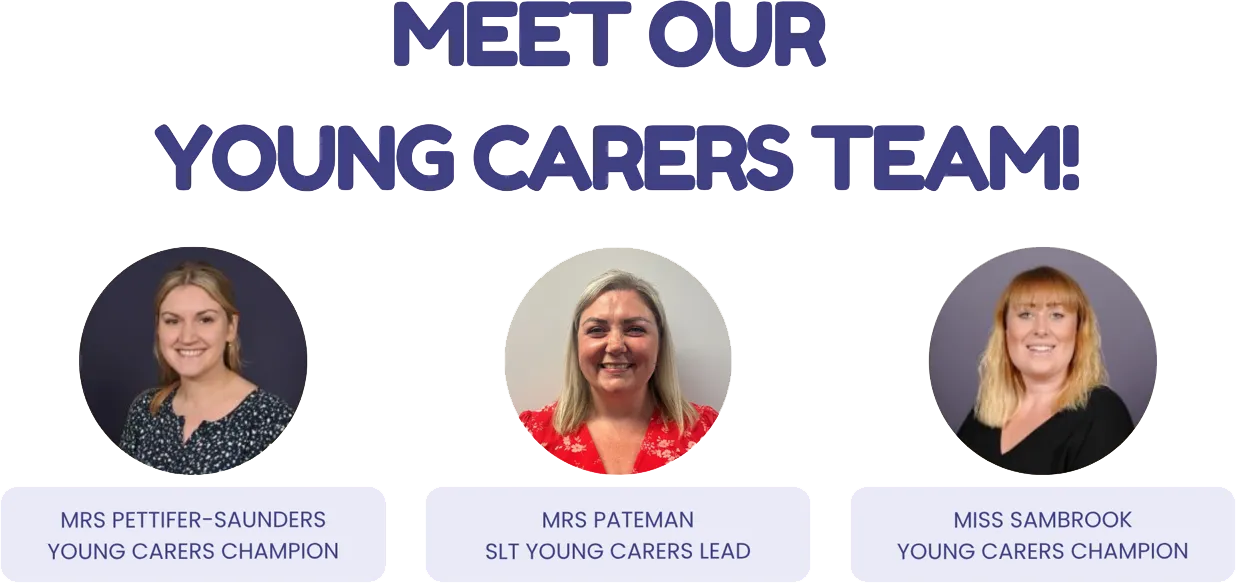
- Trusted members of staff (pictured above) who are available to listen and talk
- Wellbeing and emotional support when needed
- Opportunities to meet and spend time with other Young Carers through our Nurture Group
- Assemblies and lessons that help everyone understand and celebrate the important role of Young Carers
- Flexibility and understanding when caring responsibilities or circumstances at home affect school life
Most importantly, we want every Young Carer to know that they do not have to manage worries or responsibilities alone.
We are here to listen, understand and help so please do speak with us if you think your child(ren) may be a young carer.